
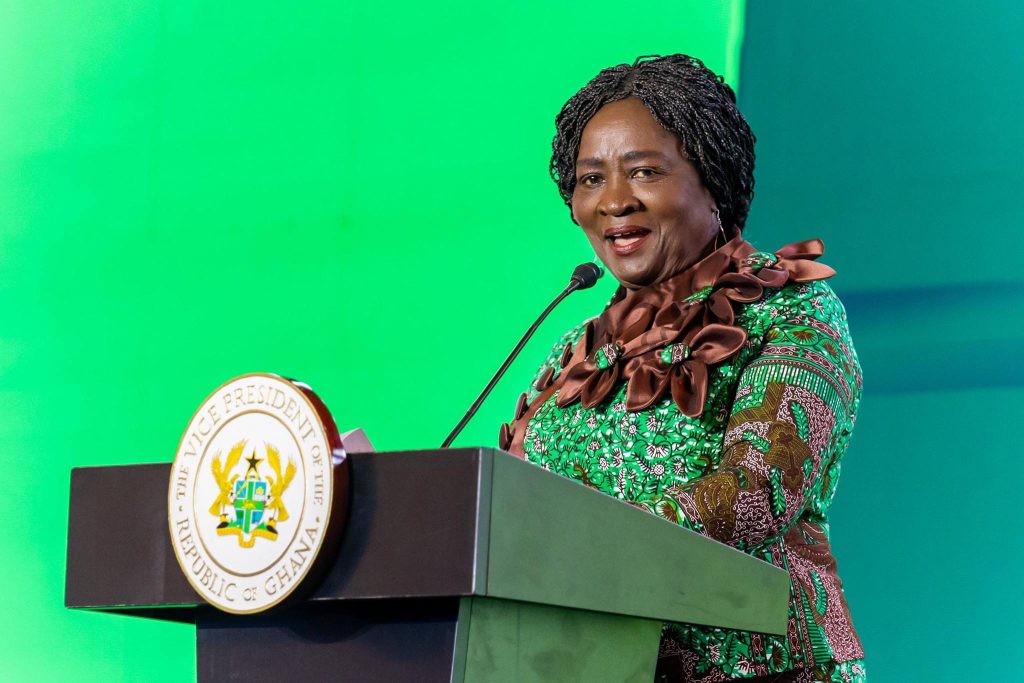
The State Interests and Governance Authority (SIGA) held its Annual Stakeholder Engagement on Thursday, 19th March 2026 at the Kempinski Hotel Gold Coast City in Accra, convening a broad cross-section of stakeholders to take stock of the performance of Ghana’s public enterprises and chart a course for reform. Government officials, ministers, sector representatives, Specified Entity leadership, civil society organisations, and members of the media were in attendance.
The engagement, held in accordance with Section 30(1) of the SIGA Act, was themed “The State as a Partner in Progress: Leveraging Public Assets for Shared Prosperity.” Vice President Prof. Jane Naana Opoku-Agyemang graced the occasion as Special Guest of Honour, representing President H.E. John Dramani Mahama.
Vice President Calls for a Fundamental Shift in Public Enterprise Management
Delivering the keynote address, Vice President Prof. Opoku-Agyemang made it clear that the government’s patience with chronic underperformance in the public enterprise sector has run its course. She argued that the country’s 170 Specified Entities have for too long hidden behind institutional history and inherited difficulties as cover for poor results, and that this era must come to an end.
In her view, these entities owe Ghanaians a meaningful return on public investment. As the citizens who fund and ultimately own these institutions, Ghanaians deserve organisations that are competitive, financially viable, and purposefully managed.
The Vice President pointed to a portfolio review jointly undertaken by SIGA and the Ministry of Finance in 2025 as evidence that the reform process is already gaining traction. The review is examining each entity’s strategic relevance to the state, with outcomes potentially including stock exchange listings for profitable enterprises and recalibrated government stakes where greater public value can be unlocked.
She also highlighted the planned introduction of a remuneration framework that links executive and board compensation directly to performance outcomes, a move intended to embed a results-oriented culture across the sector. Additionally, she commended the Ministry of Finance’s recently implemented commitment authorisation mechanism for bringing greater rigour and transparency to public procurement decisions.
Deputy Minister of Finance Condemns Reward Culture in Struggling SOEs
Deputy Minister of Finance Thomas Ampem Nyarko also addressed stakeholders at the engagement, expressing strong concern over the continued practice of loss-making entities awarding significant financial incentives to their leadership.
“It does not make sense that you will make losses and pay big bonuses to yourselves. That must stop. No SOE that makes losses must pay bonuses to management and staff,” he said.
While acknowledging the importance of staff motivation, the Deputy Minister was unequivocal that rewards must be directly tied to performance and profitability.
SIGA Director-General Issues Stern Warning to Non-Compliant Entities
Prof. Michael Kpessa-Whyte, Director General of SIGA, echoed the sentiments expressed by both the Vice President and the Deputy Minister, and went further to outline the authority’s enhanced capacity to enforce compliance. He announced that SIGA now has comprehensive visibility into the financial operations of every Specified Entity under its oversight, monitoring income and expenditure with a level of detail that leaves little room for opacity.
Prof. Kpessa-Whyte was categorical: board allowances and staff bonuses paid outside of a profitable operating context and without authorisation will not be permitted going forward. He drew a straightforward analogy from private enterprise, noting that no rational business owner distributes rewards when a company is running at a loss, and that the public sector must operate under the same logic.
He reaffirmed that SIGA supports performance-based incentives in principle, but only where they are grounded in verified results against targets set out in formally executed performance contracts.
The Annual Stakeholder Engagement remains one of the most significant forums for accountability and strategic dialogue in Ghana’s public sector calendar, and this year’s edition served notice that the expectations placed on Specified Entities are being raised considerably.